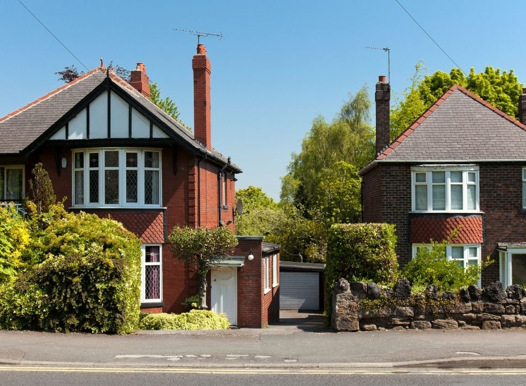
One of the most persistent misconceptions about supported living investment is that it requires specialist, purpose-built property. Large converted buildings. Heavily adapted spaces. Buildings that look and feel institutional.
This misconception puts off a significant number of property investors who would otherwise be well placed to enter the sector. And it's largely unfounded.
The reality is that supported living encompasses a genuinely diverse range of property types — many of which are entirely ordinary residential homes. Understanding what care providers actually need, and why, is one of the most practically valuable things an investor in this sector can know.
The myth of the specialist building
The figures speak for themselves. Around 85 to 90 per cent of properties listed on the Supported Living Gateway require zero adaptations compared to a standard rental property. No specialist equipment. No structural alterations. No expensive modifications.
This is because the vast majority of supported living tenants don't need a medicalised environment — they need a good home. Safe, well-maintained, appropriately sized, in a decent location with access to local services. The care and support they need is delivered by people, not by the building itself.
This has significant implications for how investors should be thinking about property sourcing. You are not looking for something unusual. In most cases, you are looking for something good.
One-bedroom flats
One-bedroom self-contained flats are one of the most sought-after property types in the supported living sector, and their popularity has grown significantly in recent years.
The appeal is straightforward. A self-contained flat gives the tenant their own front door — their own home, in the fullest sense of the word. For individuals with learning disabilities or long-term mental health needs who are capable of a high degree of independence, this model is often far preferable to shared living arrangements.
Providers frequently look for small blocks of one-bedroom flats, where one unit can serve as a staff hub while the others house tenants. This setup delivers the balance of independence and available support that works well for this tenant group — and from an investor's perspective, a small block offers multiple income streams within a single acquisition.
Bungalows
Bungalows are consistently among the most requested property types from care providers, and it's easy to understand why. The single-storey layout makes them inherently more accessible for tenants with mobility issues, and the absence of stairs removes one of the most common barriers to independent living for people with physical disabilities.
Smaller bungalows work well for individuals with complex needs who benefit from privacy and space. Larger bungalows suit small groups — for example, young people with physical disabilities who want to live together in an accessible, adapted environment.
Bungalows are also relatively straightforward to adapt where needed. Installing ramps, widening doorways, or fitting an accessible bathroom is considerably simpler in a single-storey property than in a multi-floor building.
HMOs
Despite evolving preferences in the sector, Houses in Multiple Occupation still have a place in supported living — particularly for tenant groups who benefit from shared living environments. For some individuals, the community aspect of an HMO is genuinely positive, reducing isolation and fostering social connection.
Providers looking at HMOs for supported living typically want good-sized communal spaces, and may specify either en suite bathrooms for privacy, or shared facilities to encourage interaction, depending on the tenant group. Larger communal areas are often a key requirement.
It's worth noting that HMOs in supported living operate rather differently to the private rental HMO model most investors are familiar with. The management sits with the care provider, not the investor — which removes much of the complexity that makes private HMOs demanding to run.
What care providers actually want
Perhaps the most useful shift in perspective for investors new to this sector is understanding that care providers are not looking for something exotic. They are looking for good housing stock in the right locations.
Proximity to local amenities matters. Access to healthcare, particularly specialist services, can be a significant factor. Good transport links, safe neighbourhoods, and properties that feel like homes rather than institutions are consistently cited by providers as priorities.
One aspect that surprises many investors is the implication this has for property sourcing. As one experienced supported living investor puts it, the strategy is almost the opposite of traditional property investment. Rather than seeking out run-down properties to add value through renovation, supported living investors often do best looking at well-maintained family homes at or near market value. The value is added through the lease structure and the social purpose, not through physical improvement. This opens up a considerably wider pool of potential acquisitions than many investors initially expect.
Regional variation and exit strategies
It would be misleading to suggest there is a single property type that works everywhere. Demand varies significantly by region, by local authority priorities, and by the specific tenant groups a provider works with. What's in high demand in one area may be less sought after in another — which is why understanding local demand before committing to a purchase is so important.
This regional variability also means that investors are well advised to think carefully about exit strategies from the outset. A property that works well for supported living should ideally also be viable as a standard rental or saleable on the open market if circumstances change. Having multiple exit routes is not pessimism — it's good investment practice.
Where to go from here
Module 2 of our Supported Living Strategy Course covers property types and requirements in full — from the characteristics that make different property types suitable for different tenant groups, to the adaptations that are genuinely necessary versus those that aren't, to how to have productive conversations with care providers about their specific needs. It's available on demand, so you can work through it whenever suits you.
👉 https://supportedlivinggateway.com/for-property-investors/supported-living-strategy-course/